
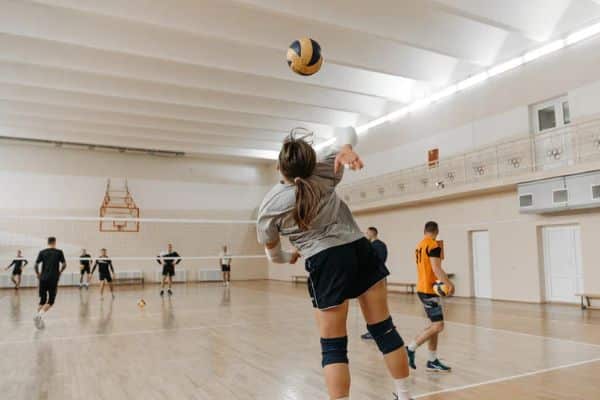
Volleyball and football place different demands on the body, but both sports can put significant stress on the shoulders. Whether you’re repeatedly serving a volleyball, throwing a football, or absorbing contact during a tackle, shoulder pain can develop from overuse or sudden injury.
While occasional muscle soreness may improve with rest, shoulder pain in volleyball and football athletes can sometimes indicate an underlying injury that requires orthopedic evaluation.
Recognizing the warning signs can help athletes protect their shoulders and avoid making an existing injury worse.
Why Is Shoulder Pain Common in Volleyball Players?
Volleyball involves frequent overhead movements, including serving, spiking, and blocking. These repetitive motions place stress on the muscles and tendons that support the shoulder.
Over time, athletes may develop conditions such as:
- Rotator cuff tendinitis: Irritation of the tendons responsible for shoulder movement and stability.
- Shoulder impingement: Irritation of shoulder structures during overhead movements.
- Labral injuries: Damage to the cartilage that helps stabilize the shoulder joint.
- Shoulder instability: Excessive movement within the joint that may cause pain or a sensation of slipping.
Volleyball players may notice discomfort when raising their arms, reduced hitting power, or shoulder pain that continues after practice. Learn more on shoulder pain that doesn’t go away.
What Causes Shoulder Injuries in Football Athletes?
Football players experience shoulder stress from throwing, blocking, tackling, and direct contact with other players.
Quarterbacks may develop overuse injuries from repetitive throwing, while linemen and other contact players face a greater risk of traumatic injuries.
Common football shoulder injuries include:
- AC joint sprains, also called shoulder separations
- Shoulder dislocations
- Rotator cuff strains or tears
- Labral tears
- Shoulder fractures
A sudden impact or awkward landing can cause immediate pain, swelling, or difficulty moving the arm.
When Should Athletes Get Shoulder Pain Checked?
Not every sore shoulder indicates a serious injury. However, certain symptoms should prompt an evaluation by a sports medicine or orthopedic specialist.
Watch for these warning signs:
- Shoulder pain that continues despite rest
- Weakness when throwing, serving, or lifting
- Difficulty raising the arm overhead
- Clicking, catching, or a feeling of instability
- Swelling or bruising following an injury
- Shoulder pain that interrupts sleep
- Recurring discomfort during practices or games
Athletes should seek prompt evaluation after a significant injury, particularly if they experience sudden weakness or limited movement. Visible deformity, a suspected dislocation, or changes in arm circulation require emergency care.
How Can Athletes Prevent Shoulder Injuries?
Maintaining shoulder strength and mobility is important for athletes participating in overhead and contact sports.
Helpful prevention strategies include:
- Warming up before practices and games
- Strengthening the rotator cuff and upper-back muscles
- Practicing proper throwing, serving, and tackling techniques
- Allowing adequate recovery between activities
- Avoiding sudden increases in training intensity
- Resting when shoulder pain develops
Athletes should avoid playing through persistent pain, as continuing activity may worsen an existing injury.
How Are Sports-Related Shoulder Injuries Treated?
Treatment depends on the type and severity of the injury.
An orthopedic specialist may recommend activity modifications, physical therapy, medication, or other nonsurgical treatments. More significant injuries, including certain tendon tears or recurrent dislocations, may require surgery.
At OSMC, our rotator cuff injury specialists evaluate shoulder conditions affecting athletes and active individuals.
Get Shoulder Injury Treatment at OSMC
At Orthopedic & Sports Medicine Center (OSMC), our orthopedic and sports medicine specialists help athletes recover from shoulder injuries and return to their activities safely.
Serving patients throughout Northern Indiana and Southwest Michigan, OSMC offers orthopedic evaluations, rehabilitation, and surgical treatment when necessary.
Don’t let shoulder pain keep you on the sidelines. Contact OSMC today to schedule an evaluation and get back to playing with confidence.
