
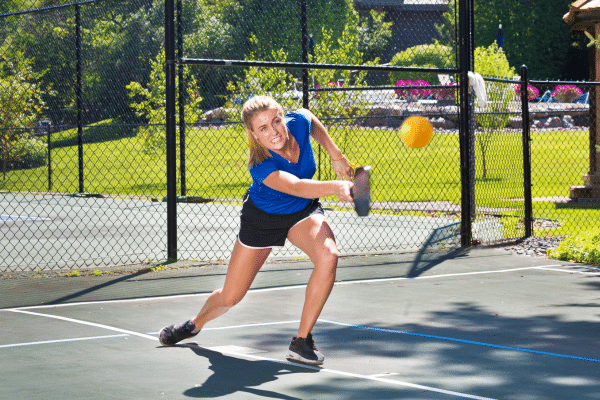
Pickleball has become one of the fastest-growing adult activity trends, offering competitive fun with a low learning curve. However, sudden stops, quick lateral movements, twisting, reaching, and serving motions can place significant stress on the lower back muscles and joints. Back pain after playing pickleball is common, and the big question becomes: Is the discomfort just temporary muscle soreness or a spinal injury?
While mild soreness may improve with rest, persistent lower back pain could indicate a muscle strain, joint irritation, or another orthopedic condition.
Why Does My Back Hurt After Playing Pickleball?
If you feel persistent pain or stiffness from playing pickleball and it does not improve with rest, or your pain increases each time you return to the court, it may be time to seek orthopedic evaluation. Get fast, professional advice for sports and orthopedic injuries—anytime. OSMC now partners with the HURT! App to provide free virtual after-hours access to orthopedic specialists,
Pickleball involves bending, lunging, rotating, and reaching for shots. These movements engage the muscles supporting your spine and can contribute to several types of back injuries.
Soreness vs. Injury: How to Tell the Difference
Typical soreness after pickleball usually appears 12 to 24 hours later and improves gradually over a few days. This soreness often responds well to rest, stretching, light movement, and hydration. However, if your back pain begins suddenly during play, limits your mobility, radiates into your hip or leg, or makes standing, bending, or walking difficult, it could indicate a strain, tendon injury, disc irritation, or joint inflammation.
Persistent pain is your body’s signal that something is not healing correctly. Identifying and treating the issue early can prevent further damage and reduce the risk of long-term pain. Not sure if your back pain from the pickleball court is serious? OSMC offers free, around-the-clock virtual injury support via the HURT! App—connect with an orthopedic specialist anytime.
Common Pickleball-Related Back Injuries
While muscle soreness is common, the repetitive bending, twisting, and reaching motions involved in pickleball can also lead to more serious injuries. These may include lumbar strains, facet joint inflammation, sciatica from irritated spinal nerves, herniated discs, and overuse-related tendon or ligament injuries. Adults who return to activity after being less active for a while are especially at risk because the spine and core may not be conditioned for sudden rotational stress. If pain does not improve or returns whenever you play, seeing an orthopedic specialist at OSMC can help you protect your spine while staying active.
1. Lower Back Muscle Strains
One common cause of lower back pain after pickleball is a muscle strain. Sudden twisting, reaching for a difficult shot, or playing longer than usual can overstretch the muscles supporting your spine.
Symptoms may include stiffness, muscle spasms, tenderness, and discomfort when bending or standing.
Learn more about muscle strains and sports injuries.
2. Repetitive Stress and Overuse
Frequent pickleball matches without adequate recovery can place repeated stress on your lower back.
Overuse-related discomfort may develop gradually, particularly if your core muscles aren’t conditioned for repetitive rotation or your playing technique places unnecessary strain on your spine.
3. Spinal Disc Irritation
The discs between your vertebrae help absorb shock and support spinal movement. Repeated bending or twisting may aggravate an existing disc condition.
A herniated disc can sometimes irritate nearby nerves, causing back pain that extends into the buttocks or legs.
4. Sciatica and Nerve Irritation
If your back pain after pickleball travels down one leg, you may be experiencing sciatica.
Sciatica occurs when the sciatic nerve or its contributing nerve roots become irritated. Symptoms can include shooting pain, tingling, numbness, or weakness.
If you feel persistent pain or stiffness that does not improve with rest, or your pain increases each time you return to the court, it may be time to seek orthopedic evaluation. Get fast, professional advice for sports and orthopedic injuries—anytime. OSMC now partners with the HURT! App to provide free virtual after-hours access to orthopedic specialists
Learn more about common causes of lower back pain.
When Should You See a Doctor for Pickleball Back Pain?
Some post-game soreness is normal, especially after increased activity. However, certain symptoms warrant professional evaluation.
Consider scheduling an orthopedic appointment if you experience:
- Back pain that persists or worsens despite rest
- Recurring pain whenever you play pickleball
- Difficulty bending, walking, or standing comfortably
- Pain radiating into your hips, buttocks, or legs
- Numbness, tingling, or weakness
Seek emergency medical care for new bladder or bowel control problems, numbness around the groin, or rapidly worsening leg weakness.
How Can You Prevent Back Pain While Playing Pickleball?
A few adjustments may help reduce unnecessary stress on your back:
- Warm up before playing.
- Strengthen your core and hip muscles.
- Increase playing time gradually.
- Practice proper movement and positioning.
- Take recovery breaks between matches.
- Avoid playing through sharp or worsening pain.
For ongoing symptoms, physical therapy may help improve strength, flexibility, and movement mechanics.
Get Back Pain Treatment at Orthopedic & Sports Medicine Center
At Orthopedic & Sports Medicine Center (OSMC), our orthopedic and sports medicine specialists evaluate back injuries and develop personalized treatment plans.
Whether you’re experiencing muscle strain, persistent stiffness, or nerve-related symptoms, our team can help identify the cause of your discomfort. Depending on your diagnosis, your treatment plan may include physical therapy, targeted pain management, or regenerative medicine treatments such as Platelet-Rich Plasma (PRP) therapy and MLS Laser Treatment. These nonsurgical options may help reduce discomfort and support recovery for certain musculoskeletal conditions, depending on the underlying cause of your back pain.
Contact Orthopedic & Sports Medicine Center today to schedule an evaluation and take the next step toward getting back on the pickleball court.
Frequently Asked Questions on Back Pain from Pickleball
Should I Stop Playing if I Have Back Pain After Pickleball?
If the pain is severe, recurring, or interfering with daily movement, rest and schedule an evaluation to prevent worsening injury.
Can Stretching Help Back Soreness from Pickleball?
Stretching can help with mild soreness, but persistent or sharp pain requires orthopedic assessment.
When is Back Pain Considered Serious?
Pain that radiates down the leg, causes numbness, weakness, or limits standing and walking should be evaluated right away.
